Operating vs finance lease under ASC 842: how to tell the difference
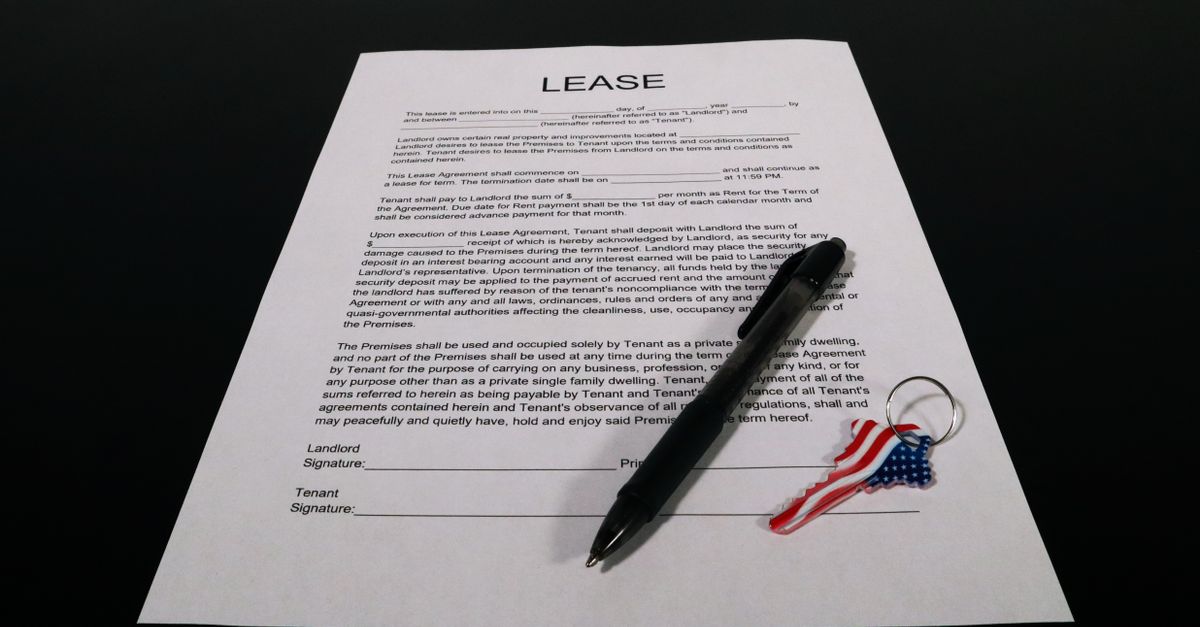
Under ASC 842, almost every lease longer than twelve months lands on the balance sheet: the lessee records a right-of-use (ROU) asset and a corresponding lease liability. That is the headline change from the old ASC 840 world, where operating leases lived off-balance-sheet in the footnotes. But ASC 842 still keeps two lessee classifications — operating and finance — and getting the classification right matters, because it drives how the lease hits your income statement over time.
This guide walks through exactly how a lessee classifies a lease under ASC 842, what evidence you need for each test, and what actually changes once you have your answer.
Both types are on the balance sheet — so why does classification matter?
The distinction is not about whether the lease appears on your balance sheet. It is about the pattern and geography of expense on the income statement.
A finance lease is treated like a financed purchase of an asset. You recognise two separate expenses: interest on the lease liability (using the effective-interest method) and straight-line amortization of the ROU asset. Because the liability is largest early on, interest is front-loaded, so total expense is higher in the early years and declines over the term.
An operating lease produces a single, straight-line lease cost each period (ASC 842-20-25-6). Interest and amortization still exist under the hood, but they are combined and the ROU amortization is deliberately plugged so the total cost is level across the term. Operating lease cost is usually presented in operating expenses, whereas finance-lease interest sits below the operating line and amortization is presented with other asset amortization.
The five classification criteria (ASC 842-10-25-2)
A lessee classifies a lease as a finance lease if it meets any one of the following five criteria at commencement. If it meets none of them, it is an operating lease (ASC 842-10-25-3). Note that ASC 842 removed the rigid bright lines of ASC 840, but the FASB explicitly permits reasonable thresholds — commonly 75% for economic life and 90% for fair value — as one acceptable way to apply the 'major part' and 'substantially all' language.
- Transfer of ownership — the lease transfers ownership of the underlying asset to the lessee by the end of the lease term (842-10-25-2(a)).
- Purchase option reasonably certain to be exercised — the lease grants a purchase option the lessee is reasonably certain to exercise (842-10-25-2(b)).
- Major part of economic life — the lease term is for the major part of the remaining economic life of the asset. A commonly used threshold is 75% or more (842-10-25-2(c)). This criterion is not applied when the lease commences at or near the end of the asset's economic life.
- Substantially all of fair value — the present value of the lease payments plus any residual value guaranteed by the lessee equals or exceeds substantially all of the asset's fair value. A commonly used threshold is 90% or more (842-10-25-2(d)).
- Specialized asset — the underlying asset is so specialized that it is expected to have no alternative use to the lessor at the end of the lease term (842-10-25-2(e)).
How to apply the tests in practice
Criteria (a) and (b) are usually the easiest — they are contractual facts you can read off the lease. If title transfers, or there is a bargain purchase option you fully expect to take, you are in finance-lease territory before you calculate anything.
Criterion (c) requires the asset's remaining economic life. For a five-year lease on a machine with a seven-year remaining life, the term covers roughly 71% — below a 75% threshold, so this test alone would not force finance treatment. For real estate the economic life is typically decades, so most property leases fail this test comfortably.
Criterion (d) is where the present-value calculation comes in. You discount the lease payments at the rate implicit in the lease if it is readily determinable, otherwise the lessee's incremental borrowing rate (ASC 842-20-30-3), add any lessee-guaranteed residual value, and compare the total to the asset's fair value. Crossing roughly 90% signals a finance lease.
Criterion (e) is a judgement about the asset itself — a custom-built fixture or a highly specialized piece of equipment with no resale or redeployment value points toward finance classification.
A quick example
Take a five-year lease of office space, $5,000 per month paid in advance, at a 7% incremental borrowing rate. Office buildings have very long economic lives, so the term is not a major part of the life. The present value of the payments is only a small fraction of the building's fair value. Title does not transfer and there is no purchase option, and office space is not a specialized asset. None of the five criteria are met — this is an operating lease, and you would recognise a single straight-line lease cost each month.
Change the facts to a five-year lease of specialized manufacturing equipment with a five-year remaining economic life and a bargain purchase option, and criteria (b), (c) and (e) all point to a finance lease.
IFRS 16 is different
If you also report under IFRS, be aware that IFRS 16 abolished the operating/finance distinction for lessees entirely. Under IFRS 16 a lessee uses a single on-balance-sheet model that looks like a finance lease — an ROU asset amortized straight-line plus interest on the liability — for essentially all leases. So a lease that is 'operating' under ASC 842 will still be expensed front-loaded under IFRS 16. Classification only survives for lessees under US GAAP. See our IFRS 16 vs ASC 842 comparison for the full picture.
Let the engine decide
Ledgerage evaluates all five ASC 842 criteria for you and shows the reasoning and the codification citation behind each one, so you can see exactly why a lease was classified operating or finance. Enter a lease in the free calculator, or call the classify endpoint from the API, and you get the answer with its evidence attached.
| Operating lease | Finance lease | |
|---|---|---|
| Balance sheet at commencement | ROU asset + lease liability | ROU asset + lease liability (identical measurement) |
| Income statement expense | Single straight-line lease cost | Interest (declining) + straight-line amortization (separate lines) |
| Expense pattern over time | Level each period | Front-loaded — higher early, lower later |
| Typical statement of cash flows | Operating activities | Financing (principal) + operating (interest) |
Frequently asked questions
Are operating leases still off the balance sheet under ASC 842?
No. That was the ASC 840 rule. Under ASC 842, a lessee puts both operating and finance leases longer than 12 months on the balance sheet as a right-of-use asset and a lease liability — classification only changes how the expense is recognised afterward, not whether the lease appears on the balance sheet.
What are the five criteria for a finance lease under ASC 842?
Ownership transfer, a purchase option reasonably certain to be exercised, a lease term covering the major part of the asset's remaining economic life, a present value equal to substantially all of the asset's fair value, or an asset so specialized it has no alternative use to the lessor. Meeting any one of the five (ASC 842-10-25-2) makes it a finance lease.
Does IFRS 16 have the same operating vs finance distinction?
No. IFRS 16 abolished the lessee operating/finance distinction — nearly all leases are accounted for like a finance lease. The distinction survives only for lessees reporting under US GAAP.
What are the commonly used thresholds for the 'major part' and 'substantially all' tests?
ASC 842 does not mandate bright lines, but the FASB has said reasonable thresholds — commonly 75% of remaining economic life and 90% of fair value — are an acceptable way to apply the 'major part' and 'substantially all' criteria.
Sources
Compute this lease for real
Free, no account required. Get the right-of-use asset, lease liability, full amortization schedule, journal entries and disclosures — every number cited.